

November 2025
Abel Araya
Associate Professor, Duoc UC Professional Institute
Chile
Based on the webinar held on October 6, 2025, organized by AFIPA
1. Introduction
This document summarizes the main contents presented by Professor Abel Araya on the role of floral borders as a sustainable tool in agricultural systems. The presentation included ecological foundations, practical experiences, and technical data derived from the project “Floral borders as sustainable tools for productive improvement in a Santina cherry orchard.”
Specifically, the experience of a pilot orchard that received technical assistance to implement Good Agricultural Practices (GAP), an Integrated Pest Management (IPM) plan, and responsible management of plant protection products was shared. All these factors contributed to a 75% increase in agricultural productivity in the cherry orchard, with most of the harvest destined for export markets.
The central objective of the webinar was to demonstrate how floral borders contribute to agricultural sustainability by promoting ecosystem services, strengthening Integrated Pest Management (IPM), and improving productivity in balance with environmental conservation.
2. Ecological foundations
The concept of ecological succession is the basis for understanding processes of change and stability in ecosystems. It refers to the natural development of biological communities that, over time, reach a state of balance known as a climax community.
In agricultural contexts, human intervention modifies this succession through land use, inputs, and management practices, shaping what is known as an agroecosystem. In these simplified systems, characterized by low diversity and high food availability, conditions arise that allow certain organisms to become pests.
Floral borders act as a strategy to reintroduce functional diversity, balancing ecological processes and favoring the presence of natural enemies and pollinators.
3. What are floral borders?
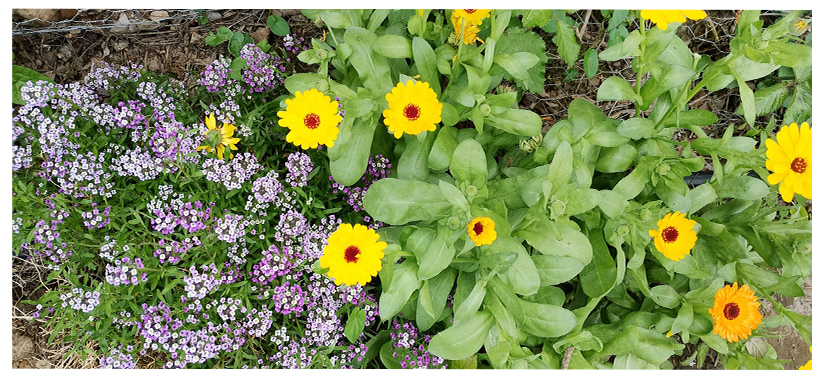
Floral borders consist of strips of variable dimensions, established along the margins or non-productive areas of an orchard, composed of plant species with attractive and prolonged flowering. Their incorporation into agroecosystems promotes essential ecosystem services by creating niches that attract beneficial insects, such as pollinators and biological control agents, strengthening Integrated Pest Management (IPM) strategies and improving the resilience of the agricultural system.
4. Implementation objectives
The main objectives of implementing floral borders include:
- Enhancing ecosystem services related to pollination and biological control.
- Improving crop productivity and sustainability through ecological balance.
- Strengthening integrated pest management strategies and reducing dependence on agrochemicals.
5. Long-term sustainability
Abel Araya emphasized that agricultural sustainability must be understood in economic, ecological, and social terms, known as the triple impact. Preserving pollinators and natural enemies means securing the foundation of future production.
It is estimated that natural pollination represents a global economic value exceeding €153 billion annually (Ricou et al., 2014; Vilhena et al., 2012), and its loss would have catastrophic consequences.
Investing today in floral borders is more efficient than facing pollinator scarcity in the future. In addition, balanced agroecosystems show lower annual yield fluctuations, providing economic stability and improving the commercial image of agricultural products through green marketing.
6. Practical experience: Santina cherry orchard
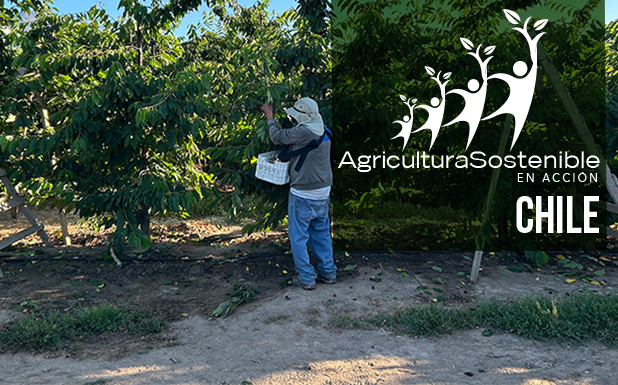
The project “Floral borders as sustainable tools for productive improvement in a Santina cherry orchard”demonstrated the technical and economic feasibility of this practice. The cherry orchard is located in the municipality of Coltauco, O’Higgins Region, covers one hectare, and belongs to farmer Cristian Osorio. The intervention carried out in the orchard is part of the Sustainable Agriculture in Action project, known as SPMF by its English acronym.
The implementation of Good Agricultural Practices (GAP), Integrated Pest Management (IPM), and responsible management of plant protection products were key factors in significantly increasing both productivity and cherry quality.
In this case, the installation of floral strips along the edges of the crop increased the presence of pollinators, improved fertilization, and stabilized yields without increasing chemical inputs. Additional benefits were observed in natural pest control and the improvement of the agricultural landscape, consolidating a virtuous relationship between production and conservation.
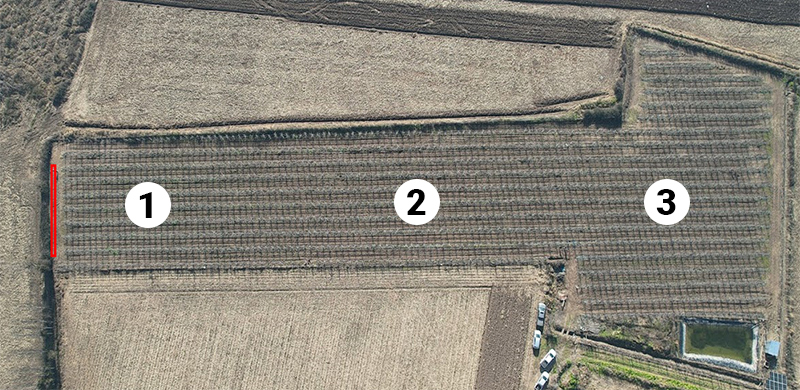
Cherry orchard located in the municipality of Coltauco, O’Higgins Region. Area: one hectare
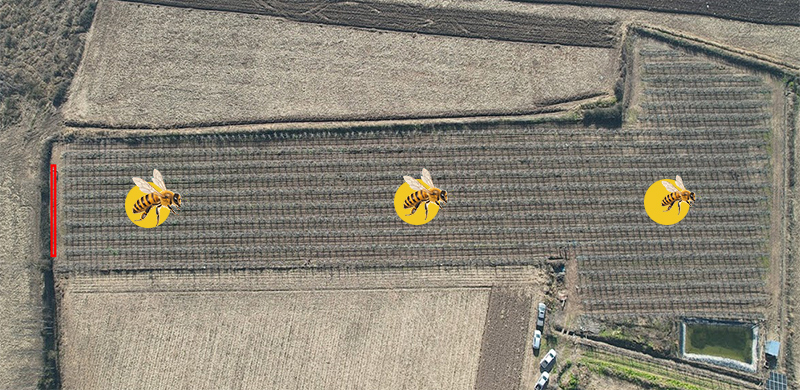
It was observed that pollinator and insect populations were more abundant in areas closer to the floral borders
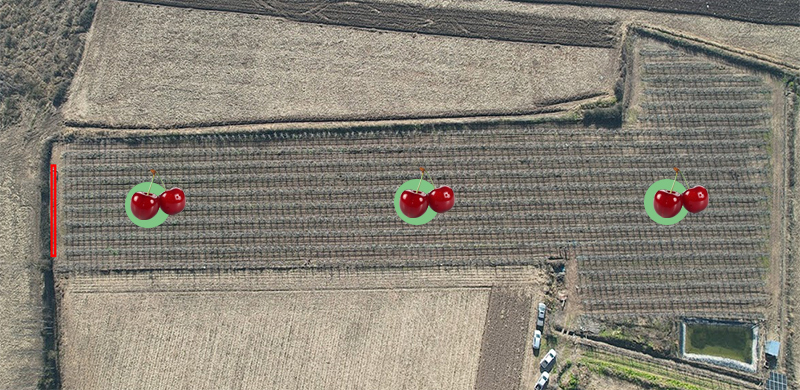
Cherry trees showed higher fruit set during harvest in areas with greater insect presence, indicating a spillover of beneficial entomofauna from the floral border to nearby trees
7. Implementation: design and synchronization
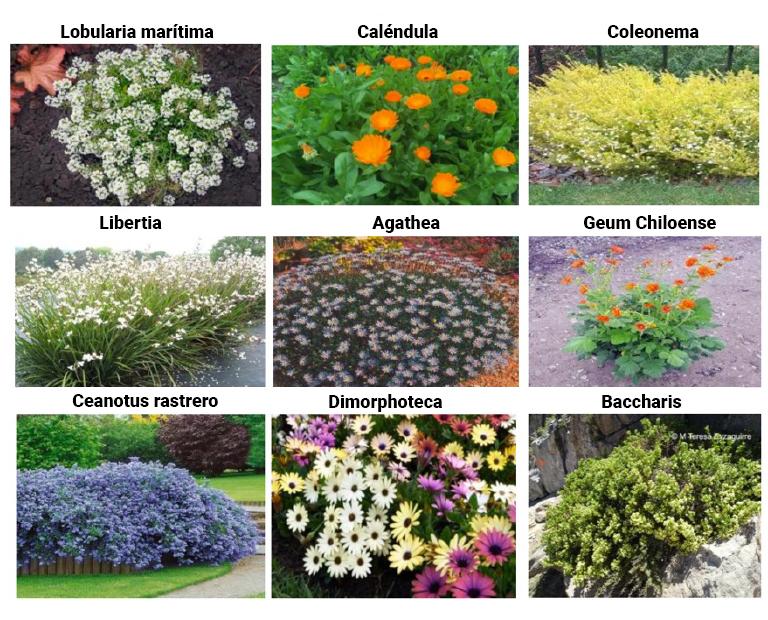
The design of the floral border should be based on the strategic selection of species according to their flowering period, agronomic compatibility, and ecological function.
In the case of the cherry orchard, nine plant species were selected, three native and six exotic.
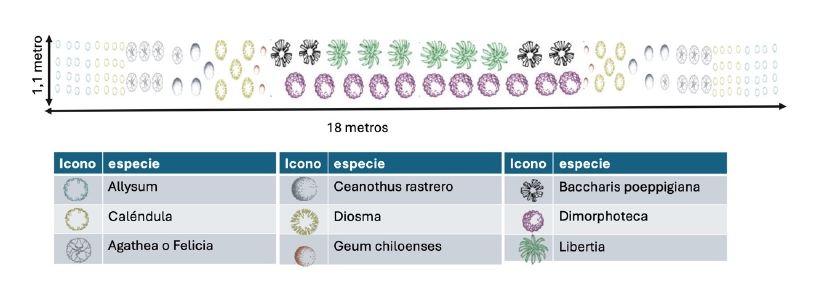
It is essential to plan the synchronization of flowering between the floral border and the main crop, in order to align anthesis periods and promote the arrival and permanence of pollinators in both areas.
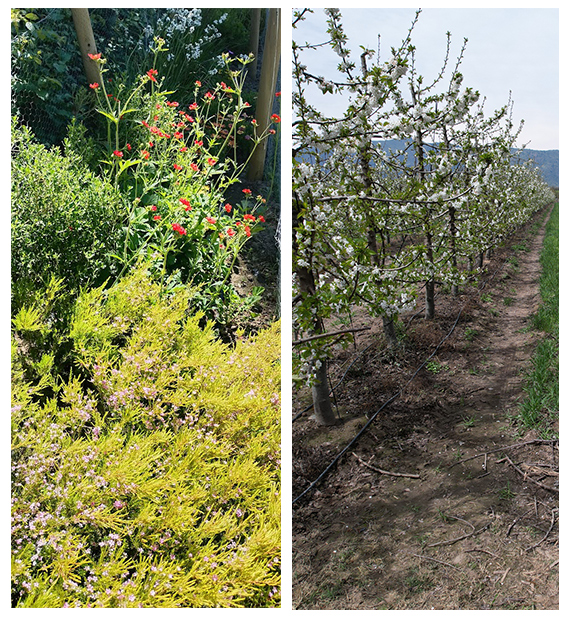
In this way, cross-pollination and the transfer of ecosystem services are enhanced, generating tangible production benefits.
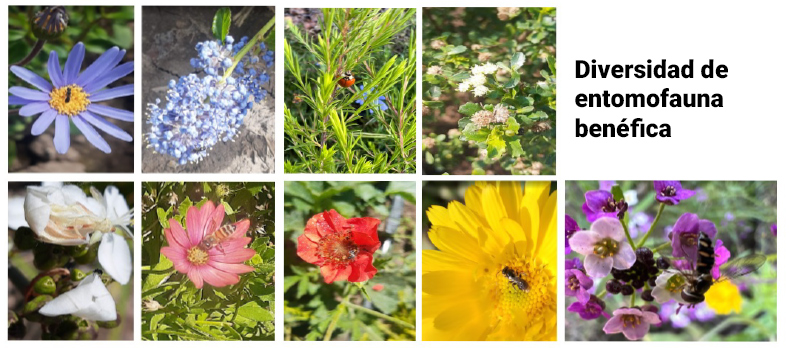
Each of the nine species used in the floral border attracted different insects, with bees and hoverflies being the most prevalent.
8. Installation and prior land management
During installation, it is recommended to build a perimeter fence to restrict access and prevent damage by lagomorphs, protecting young plants during their establishment phase.
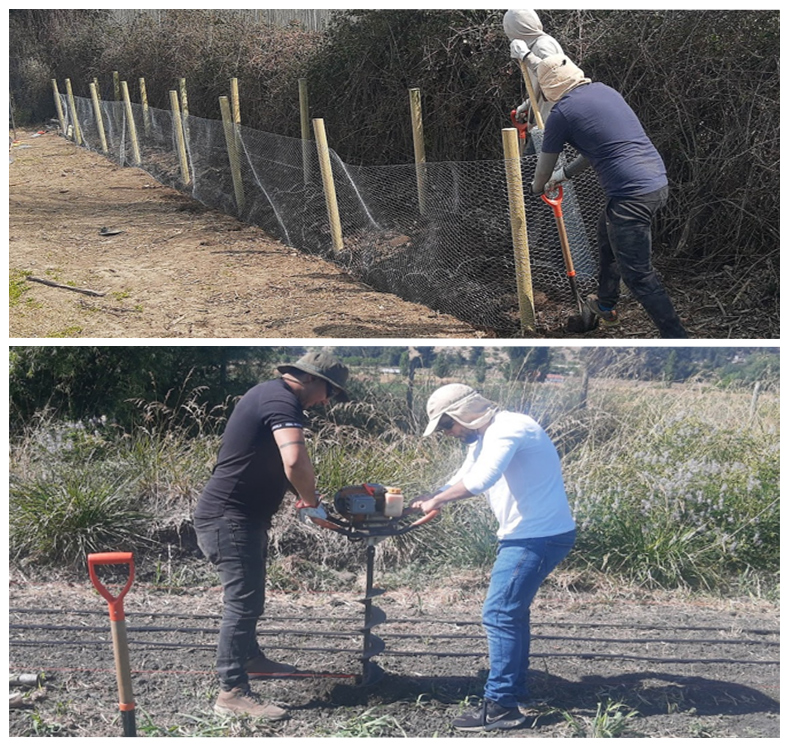
A key complementary practice is blind sowing, which involves heavily irrigating the soil before planting to stimulate the germination of latent weeds. These weeds are eliminated prior to transplanting the selected species, reducing initial competition and improving the success of the floral border.
9. Future outlook
The implementation of floral borders is projected as a highly functional practice within modern sustainable agriculture. It should be understood as an investment in present and future productivity, by favoring in situ conservation of pollinators and other beneficial organisms.
This practice embodies the land-sharing paradigm, where agricultural production and biodiversity conservation coexist for mutual benefit, promoting more resilient and sustainable agricultural systems.
10. Conclusions
-
Floral borders represent an effective ecological management tool that integrates productivity, sustainability, and environmental responsibility.
-
By balancing ecological processes and strengthening ecosystem services, they constitute a viable alternative to reduce agrochemical use, improve crop quality, and ensure long-term economic stability for producers.
-
Based on the results, it is recommended to include additional floral strips at different points within the field to further enhance their benefits.
The experience of the cherry orchard in Chile demonstrates that good field practices, the adoption of innovations, and the implementation of applied science can successfully converge, offering a clear pathway toward a more balanced, competitive, and environmentally respectful agriculture.