

An evidence-based approach to understanding what regenerative agriculture is—and what it is not—and how agricultural innovation can contribute to more sustainable, resilient and profitable production systems.
July 2026
By Alejandro Hernández PhD
Director of Science and Biotechnology
CropLife Latin America
Regenerative agriculture represents an opportunity to advance towards more productive, resilient and sustainable agricultural systems. It is an outcomes-based approach to farming that seeks to maintain or improve soil function, productivity, climate resilience, functional biodiversity and the long-term economic viability of farmers.
It is grounded in soil science, agronomy and ecology, and is assessed through measurable indicators rather than adherence to a fixed set of practices. Its implementation must be context-specific, adapting to the crop, soil, climate and production system. [1], [2]
According to the current scientific literature, regenerative agriculture is guided by three core principles:
- Results, not ideology. Regenerative agriculture is defined by what is measured—soil function, carbon dynamics, the water cycle, biodiversity, productivity and farm income—rather than by adherence to a single production model. [1]
- Science-based and verifiable. Claims regarding regenerative benefits must be supported by indicators that can be monitored, audited and compared across production systems. [3]
- Context-specific. Regenerative agriculture does not prescribe a universal recipe. Appropriate practices for hillside coffee, soybean production in the Cerrado, irrigated rice, intensive horticulture or rainfed maize will differ. Outcomes depend on soil type, climate, crop rotation design and farm economics. [2]
What is the scientific basis of regenerative agriculture?
The scientific literature converges on an operational definition in which regenerative agriculture is an agricultural production approach that uses soil conservation as the starting point for generating multiple ecosystem services while integrating socio-economic outcomes such as food security and farmers' livelihoods. [3], [4]
At the same time, the term lacks a single, universally accepted regulatory definition. Several authors warn that this ambiguity may reduce the concept to a marketing strategy rather than establishing it as a measurable system of agricultural practices. [5]
Regenerative agriculture focuses on the following key areas:
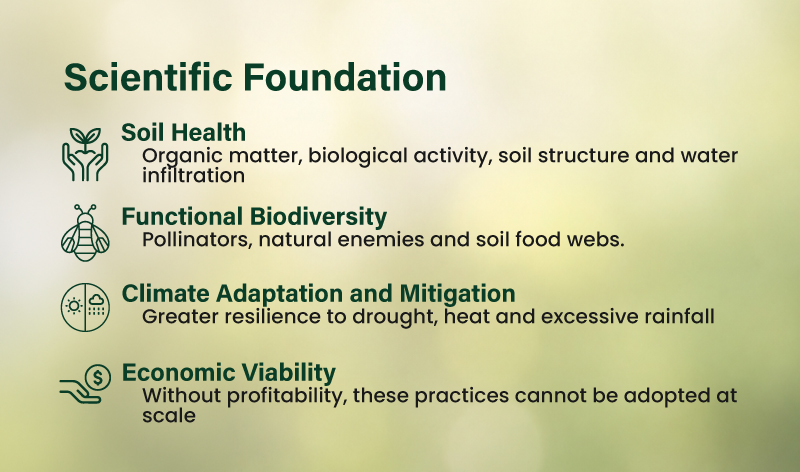
Soil health as the foundation. Building or maintaining soil organic matter, biological activity, soil structure, water infiltration and water-holding capacity. [5]
Functional biodiversity. Supporting soil food webs, pollinators and natural enemies of pests through diversified crop rotations, cover crops and habitat management. [6] Climate adaptation and mitigation. Increasing resilience to drought, heat and excessive rainfall while contributing to carbon sequestration where biophysical conditions allow. [1], [5]
Economic viability for farmers. Without profitability, regenerative practices will not be adopted at scale. [7], [8]
Measurable indicators as an imperative
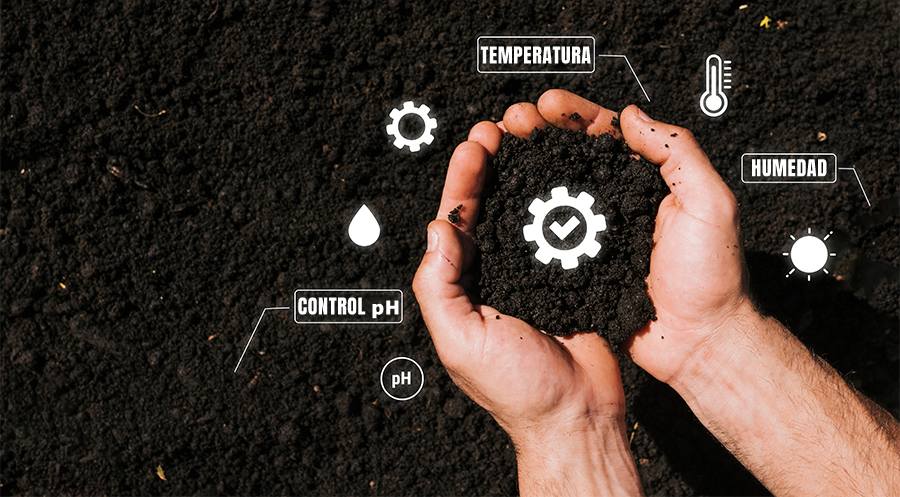
Scientific evidence is essential to substantiate the benefits attributed to regenerative agriculture. This requires assessments based on indicators that can be compared and audited over time, including:

- Soil organic matter and soil organic carbon stocks.
- Water dynamics: infiltration rate, water-holding capacity and runoff reduction.
- Erosion control: wind and water erosion rates.
- Functional biodiversity: soil microbial activity, pollinator density and populations of natural enemies.
- Nutrient-use efficiency.
- Productivity: yield, crop quality and yield stability under climate stress.
- Economic outcomes: farm profitability, risk-adjusted income and input costs per unit produced.
- Input-use intensity: volume of crop protection products used per unit produced, treated as a metric of responsible stewardship rather than an objective in itself.
- Resilience: yield stability under drought, heat or excessive rainfall events.
What regenerative agriculture is not
❌ It is not synonymous with organic agriculture. Organic farming systems have specific certification requirements and may face yield gaps or pest management challenges. Regenerative agriculture does not require organic certification. [9]
❌ It is not pesticide-free by definition. The exclusion of crop protection tools is not a defining characteristic. What matters is their responsible, integrated and needs-based use within science-based management frameworks.[6], [9]
❌ It does not guarantee higher yields in every context. Productivity outcomes depend on the production context, the initial condition of the soil and management intensity. [2], [9]
❌ It is not a one-size-fits-all prescription. Practices must be adapted to the crop, soil, climate and economic conditions. [2],[10]
❌ It does not replace science-based regulation. Regenerative agriculture complements—but does not replace—the science-based regulatory oversight of agricultural inputs. [3], [5]
Innovation and Modern Tools in Regenerative Agriculture
Regenerative agriculture is compatible with—and frequently benefits from—modern agricultural tools, provided that they are used within science-based responsible management frameworks. [11] When used responsibly under the principles of Integrated Pest Management, crop protection products can form part of the range of tools farmers use to achieve measurable regenerative outcomes. [6] These include:
- Integrated Pest Management. IPM is a fundamental, science-based framework for managing pests, diseases and weeds. [12, p. 409], [13, p. 1988] Regenerative agriculture builds on IPM by incorporating explicit outcomes related to soil health, functional biodiversity, input-use efficiency and system resilience. [14, p. 5] IPM is not an outdated model that should be replaced; it is a baseline that regenerative systems expand upon.[15, p. 324]
- Biological and biorational solutions. These can complement or reduce reliance on conventional chemical solutions and align well with regenerative principles. [16, p. 17]
- Precision and digital agriculture. Targeted application, decision-support tools and data analysis can increase input-use efficiency and reduce the environmental footprint. [17, p. 3]
- Responsible stewardship and good management practices. Responsible handling, appropriate application timing, drift management and resistance management are essential for the safe and effective use of any agricultural input. [18, p. 1206]
Contribution of the Crop Science Industry
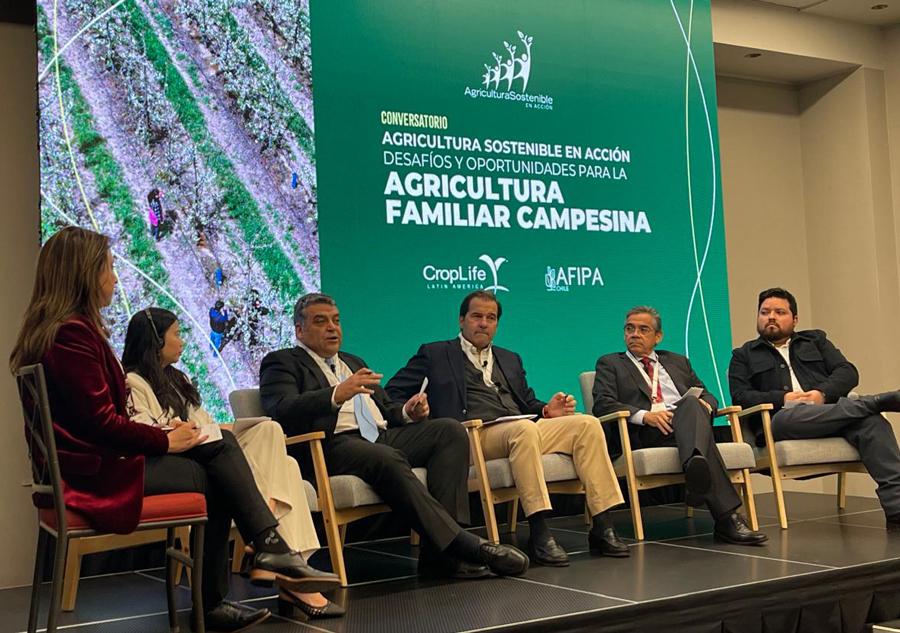
Member companies contribute to regenerative agriculture through innovation in crop protection, biological solutions, digital tools, precision technologies and responsible stewardship programmes. These contributions can help farmers produce more and with greater efficiency, reduce losses caused by pests, diseases and weeds, optimise resource use and strengthen their capacity to adapt to increasingly challenging climatic conditions.
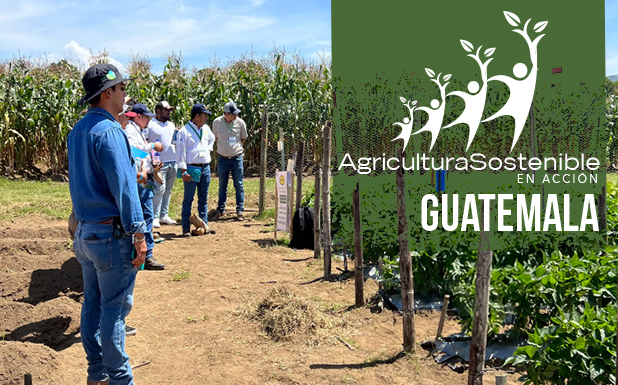
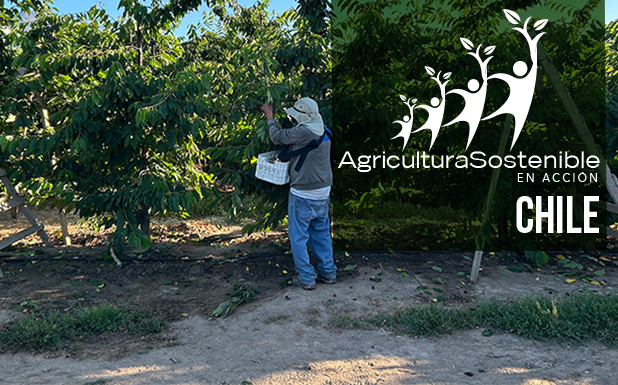
The following examples illustrate how this contribution is put into practice. They are illustrative rather than exhaustive and are not presented as scientific evidence of regenerative outcomes.
Conclusion: Regenerative agriculture is strongest when:
1) It is defined by verifiable outcomes, not ideology.
2) It is supported by soil science, agronomy and ecology.
3) It recognises the diversity of crops, climates and production systems across Latin America.
4) It integrates modern tools such as Integrated Pest Management, precision agriculture, biological inputs and the responsible stewardship of crop protection products.
5) Its progress is assessed through transparent, comparable and auditable indicators.
Framed in this way, regenerative agriculture offers a constructive pathway to strengthen productivity, profitability, environmental performance and resilience, without assuming a single technology, input regime or production philosophy. [3], [2]

Frequently Asked Questions about Regenerative Agriculture
What is regenerative agriculture?
Regenerative agriculture is an agricultural production approach based on measurable outcomes—not on a fixed list of practices—that seeks to maintain or improve soil function, biodiversity, climate resilience and the farmer’s economic viability over time. [1], [2]
Is regenerative agriculture the same as organic agriculture?
No. Regenerative agriculture does not require organic certification, nor does it exclude the use of pesticides or synthetic fertilisers by definition. Organic systems, by contrast, follow specific certification requirements and may face yield gaps or pest management challenges. [9]
Does regenerative agriculture prohibit the use of pesticides?
No. Excluding crop protection tools is not a defining criterion of regenerative agriculture. A regenerative system is defined by the responsible, integrated and needs-based use of such tools within frameworks such as Integrated Pest Management.[6], [9]
Does regenerative agriculture guarantee higher yields?
Not necessarily. Productivity outcomes depend on the context, including the type of crop, the initial condition of the soil, the climate and the intensity of management. There is no universal promise of higher yields. [2], [9]
Is there an official regenerative agriculture certification?
There is no single, universally accepted regulatory definition. Several authors identify this ambiguity as a risk: without measurable and auditable indicators, the term may become a marketing strategy rather than a verifiable system of practices. [5]
¿How can it be determined whether a system is genuinely regenerative?
It is assessed through indicators that can be compared over time, such as soil organic matter, water infiltration rate, microbial activity, yield stability under climate stress and farm profitability—not through adherence to a specific practice. [3]
Are modern agricultural tools compatible with regenerative agriculture?
Yes. Regenerative agriculture is compatible with—and frequently benefits from—technologies such as precision agriculture, biological solutions and Integrated Pest Management, provided that they are applied within science-based responsible management frameworks. [11], [6]
Can regenerative agriculture incorporate genetically modified or improved seeds?
Sí. La Agricultura Regenerativa, al definirse por resultados medibles (salud del suelo, biodiversidad, productividad, resiliencia climática) y no por la exclusión de tecnologías específicas, no proscribe por definición el uso de semillas genéticamente modificadas o mejoradas por métodos convencionales o biotecnológicos [5],[19],[20]. Esta apertura es coherente con su definición basada en medición de la regeneración y con el principio de que lo relevante es el resultado, no la herramienta [1], [14]. La adopción real varía según el país: en América Latina existen marcos regulatorios consolidados que han facilitado la adopción de cultivos biotecnológicos, mientras que en otras regiones las tasas de adopción son más bajas [21], [22], [23], [24]. El uso de semillas mejoradas —ya sea por métodos convencionales, hibridación o biotecnología— puede incluso apoyar varios indicadores regenerativos —tales como la estabilidad del rendimiento bajo estrés climático y la eficiencia en el uso de insumos— siempre que se integren dentro de un manejo agronómico basado en ciencia y monitoreo de suelos [7], [25], [26]. Esta integración busca optimizar la resiliencia de los agroecosistemas frente a la creciente incertidumbre climática, sin contraponerse a la adopción de estrategias que fomenten la biodiversidad y la sostenibilidad a largo plazo.
¿La agricultura regenerativa aplica igual en todos los cultivos y regiones de América Latina?
No. Es específica para cada contexto: las prácticas adecuadas para café en laderas, soya en el Cerrado, arroz bajo riego o maíz de secano son distintas entre sí, porque dependen del suelo, el clima y la economía del productor [2].
¿Qué papel juega el Manejo Integrado de Plagas en la agricultura regenerativa?
El Manejo Integrado de Plagas (MIP) es la línea base científica sobre la cual se construyen los resultados regenerativos en el manejo de plagas, enfermedades y malezas [12, p. 409], [13, p. 1988]. La agricultura regenerativa no reemplaza el MIP, sino que lo amplía al incorporar metas explícitas de salud del suelo, biodiversidad funcional y eficiencia en el uso de insumos dentro del mismo marco de decisión [14, p. 5], [15, p. 324].
¿La rotación de cultivos por sí sola es suficiente para considerarse agricultura regenerativa?
No. Ninguna práctica individual —incluida la rotación de cultivos— define por sí sola un sistema como regenerativo; lo que lo define es el resultado medible que esa práctica produce en función del suelo, biodiversidad, productividad e ingresos del productor [1]. La rotación de cultivos puede ser una herramienta valiosa dentro de un sistema regenerativo, especialmente para biodiversidad funcional [6], pero su sola presencia no sustituye la necesidad de verificar resultados con indicadores auditables [3].
References
[1] K. R. Wilson, R. L. Myers, M. Hendrickson, and E. A. Heaton, “Different Stakeholders’ Conceptualizations and Perspectives of Regenerative Agriculture Reveals More Consensus Than Discord,” Nov. 2022, doi: 10.3390/su142215261.
[2] K. E. Giller, R. Hijbeek, J. Andersson, and J. Sumberg, “Regenerative Agriculture: An agronomic perspective,” Mar. 2021, doi: 10.1177/0030727021998063.
[3] S. Jayasinghe, D. Thomas, J. P. Anderson, C. Chen, and B. Macdonald, “Global Application of Regenerative Agriculture: A Review of Definitions and Assessment Approaches,” Nov. 2023, doi: 10.3390/su152215941.
[4] L. Schreefel, R. P. O. Schulte, I. J. M. de Boer, A. P. Schrijver, and H. H. E. van Zanten, “Regenerative agriculture – the soil is the base,” Aug. 2020, doi: 10.1016/j.gfs.2020.100404.
[5] C. L. Rosier, A. M. Knecht, J. Steinmetz, A. Weckle, K. Bloedorn, and E. Meyer, “From soil to health: advancing regenerative agriculture for improved food quality and nutrition security,” Oct. 2025, doi: 10.3389/fnut.2025.1638507.
[6] M. A. Hassan et al. , “Regenerative Agriculture and Sustainable Plant Protection: Enhancing Resilience Through Natural Strategies,” Dec. 2025, doi: 10.3390/plants15010113.
[7] R. Khangura, D. Ferris, C. Wagg, and J. Bowyer, “Regenerative Agriculture—A Literature Review on the Practices and Mechanisms Used to Improve Soil Health,” Sustainability , vol. 15, no. 3, pp. 2338–2338, Jan. 2023, doi: 10.3390/su15032338.
[8] S. Lemke, N. Smith, C. Thiim, and K. Stump, “Drivers and barriers to adoption of regenerative agriculture: cases studies on lessons learned from organic,” International Journal of Agricultural Sustainability , vol. 22, no. 1, Mar. 2024, doi: 10.1080/14735903.2024.2324216.
[9] G. A. Musto, P. A. Swanepoel, and J. Strauss, “Regenerative agriculture v. conservation agriculture: potential effects on soil quality, crop productivity and whole-farm economics in Mediterranean-climate regions,” Apr. 2023, doi: 10.1017/s0021859623000242.
[10] G. Susanne and M. M.T., “Regenerative farming offers many options, but there’s no ‘one-size-fits-all.’” Jan. 01, 2025. Accessed: Mar. 2026. [Online]. Available: https://research.wur.nl/en/publications/regenerative-farming-offers-many-options-but-theres-no-one-size-f
[11] E. Mclennon, B. Dari, G. Jha, D. Sihi, and V. Kankarla, “Regenerative agriculture and integrative permaculture for sustainable and technology driven global food production and security,” Agronomy Journal , vol. 113, no. 6, pp. 4541–4559, Jul. 2021, doi: 10.1002/agj2.20814.
[12] D. G. Bottrell and K. G. Schoenly, “Integrated pest management for resource-limited farmers: challenges for achieving ecological, social and economic sustainability,” The Journal of Agricultural Science , vol. 156, no. 3, pp. 408–426, Apr. 2018, doi: 10.1017/s0021859618000473.
[13] D. Chandler, A. Bailey, G. M. Tatchell, G. Davidson, J. Greaves, and W. P. Grant, “The development, regulation and use of biopesticides for integrated pest management,” Philosophical Transactions of the Royal Society B Biological Sciences , vol. 366, no. 1573, pp. 1987–1998, May 2011, doi: 10.1098/rstb.2010.0390.
[14] P. Newton, N. Civita, L. Frankel‐Goldwater, K. Bartel, and C. Johns, “What Is Regenerative Agriculture? A Review of Scholar and Practitioner Definitions Based on Processes and Outcomes,” Frontiers in Sustainable Food Systems , vol. 4, Oct. 2020, doi: 10.3389/fsufs.2020.577723.
[15] W. Mansfield and R. Culas, “Regenerative agriculture and adaptive capacity of farmers,” Current Science , vol. 129, no. 4, pp. 320–328, Aug. 2025, doi: 10.18520/cs/v129/i4/320-328.
[16] J. Deguine, J. Aubertot, R. J. Flor, F. Lescourret, K. A. G. Wyckhuys, and A. Ratnadass, “Integrated pest management: good intentions, hard realities. A review,” Agronomy for Sustainable Development , vol. 41, no. 3, May 2021, doi: 10.1007/s13593-021-00689-w.
[17] J. Peñuelas, F. Coello, and J. Sardans, “A better use of fertilizers is needed for global food security and environmental sustainability,” Agriculture & Food Security , vol. 12, no. 1, Mar. 2023, doi: 10.1186/s40066-023-00409-5.
[18] V. H. Dale, K. L. Kline, E. S. Parish, and S. E. E. Inwood, “Engaging stakeholders to assess landscape sustainability,” Landscape Ecology , vol. 34, no. 6, pp. 1199–1218, Jun. 2019, doi: 10.1007/s10980-019-00848-1.
[19] P. Tittonell et al., “Regenerative agriculture—agroecology without politics?,” Frontiers in Sustainable Food Systems, vol. 6, Aug. 2022, doi: 10.3389/fsufs.2022.844261.
[20] T. Mambo and G. Lhermie, “The futures for regenerative agriculture: insights from the organic movement and the tussle with industrial agriculture,” Frontiers in Sustainable Food Systems, vol. 8, Dec. 2024, doi: 10.3389/fsufs.2024.1455024.
[21] D. M. Lewi, P. Godoy, and F. Simeone, “Experiences, learnings and perspectives in the regulation of agricultural biotechnology: the view from Argentina,” Jun. 2025, doi: 10.3389/fbioe.2025.1600642.
[22] N. B. Candia, M. G. U. Mayans, P. H. Sotelo, E. Nara, A. A. Arrúa, and D. F. Ríos, “Paraguay’s approach to biotechnology governance: a comprehensive guide,” Mar. 2024, doi: 10.3389/fbioe.2024.1373473.
[23] M. E. Segretin, G. Soto, and C. D. Lorenzo, “Latin America: a hub for agrobiotechnological innovations,” Oct. 2024, doi: 10.1093/aob/mcae191.
[24] Y. C. Colmenárez and C. Vásquez, “Benefits associated with the implementation of biological control programmes in Latin America,” May 2024, doi: 10.1007/s10526-024-10260-7.
[25] M. G. Manzeke‐Kangara, E. J. M. Joy, R. M. Lark, S. Redfern, A. Eilander, and M. R. Broadley, “Do agronomic approaches aligned to regenerative agriculture improve the micronutrient concentrations of edible portions of crops? A scoping review of evidence,” Jul. 2023, doi: 10.3389/fnut.2023.1078667.
[26] A. C. Newton, H. E. Creissen, I. A. Erreguerena, and N. D. Havis, “Disease Management in Regenerative Cropping in the Context of Climate Change and Regulatory Restrictions,” Jul. 2024, doi: 10.1146/annurev-phyto-121423-042037.